


Design System Guardian
Your design system manual (DSM) shouldn’t stop evolving the moment it’s handed over. We help SaaS teams keep theirs useful, consistent and ready for whatever comes next. With a named senior guardian, a living design system manual and ongoing component updates, we look after the foundations so your team can get on with building a better product!
Our DSM software of choice


Keep Your Design System Working as Hard as Your Product Team
A named guardian
A senior point of contact responsible for keeping your system moving in the right direction
A living manual
Clear guidance on what to use, when to use it and how to contribute without creating more inconsistency.
Monthly updates
An agreed programme of component and token improvements, prioritised around your product’s needs.
Quarterly health checks
A regular look at system health, adoption and the gaps holding your team back.


We Love Helping SaaS Teams Build on Solid Foundations
Growing products get complicated. More features, more designers, more developers and, before long, three different versions of the same button. Your design system should help everyone make better decisions, not become another thing nobody has time to look after.
From Handover to Something Your Team Actually Uses

We partner with SaaS companies navigating growth, complexity and change. Our Design System Guardian service gives your system a named owner on our side and a clear way forward. We keep the library, its documentation and your team’s day-to-day needs connected, so the system stays useful as your product evolves.
Working directly with your team to make their lives easier
We work alongside your designers and developers to review contributions, improve shared components and keep the design system manual current.
Together, we agree who makes decisions, how changes get approved and what deserves attention next.
You keep ownership of your files, your product and your decisions. We take responsibility for the agreed guardianship work, with a senior person who knows your system and helps your team get more from it.
Featured DSM Clients


Connecting Design System Health to a Better SaaS Experience
Your customers don’t see your component library. They see whether your product makes sense. Familiar patterns, clear feedback and consistent interactions can make complex software easier to use. A well-maintained design system helps your team deliver that experience more consistently.
We look beyond how the library is organised to how it supports the product. Where you have suitable data, we can connect system improvements to specific usability problems, support themes or friction in important journeys. Where you don’t, we start with a sensible baseline rather than promising an uplift we can’t measure.
.
Our approach connects UX to commercial outcomes. For guardianship, that starts with agreeing what progress looks like for your team: greater component adoption, fewer duplicate patterns, clearer guidance or less design-to-development rework. We keep those goals visible, so you can see what’s improving and where we should focus next.
“The excellent team at Strafe have worked with Intelligent Play to deliver two really important projects. From carrying out a UX audit to clearly understanding and making recommendations. The service and level of work has been of the highest calibre at every stage”

The level of detail they went into meant that we made some pretty significant changes that helped us make things so much easier for our users. We’ve been really pleased with their work and consider them part of the team now.

Common problems our DSM service fixes
Is your design system falling behind the product it’s meant to support?
Our Design System Guardian service helps you close that gap. We bring ongoing ownership to the work that’s easy to put off: reviewing contributions, updating components, explaining decisions and keeping the manual useful. It’s a focused system-health retainer, not a general design subscription or an unlimited queue of new feature requests.
Got a Design System, but Nobody Has Time to Own It?
We give you a named senior guardian to manage the agreed backlog, coordinate reviews and keep updates moving. Your internal lead stays involved in the decisions without having to chase every detail.
Is Your Design System Manual Already Out of Date?
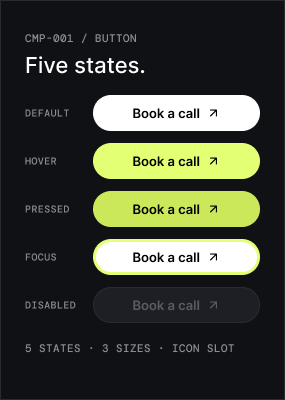
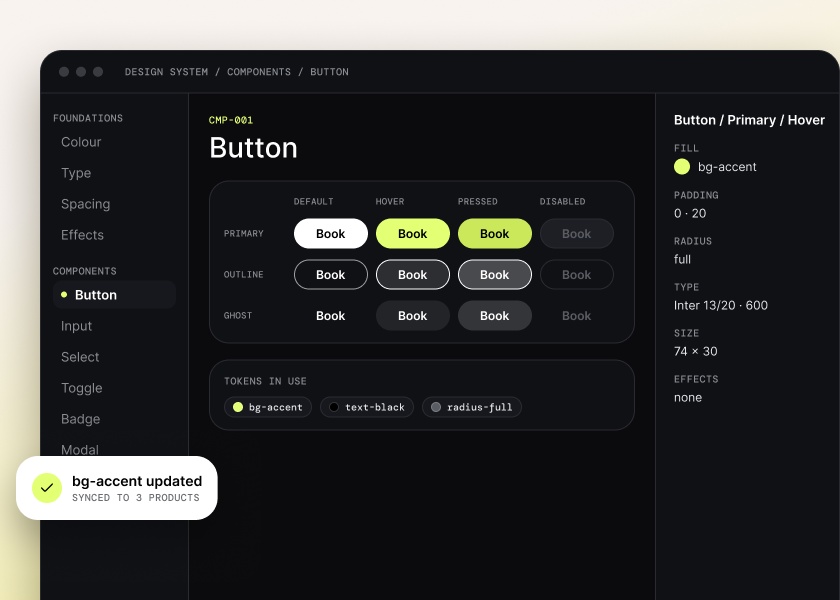
We keep guidance connected to the components your team actually uses. That includes usage rules, important states, exceptions and a change log, so people can understand the system without relying on whoever built it originally.
Are Designers and Developers Working from Different Versions?
We help identify the gaps between your Figma library and the live product, then agree what needs changing and who will do it. Production code changes aren’t assumed to be included; we define those responsibilities with your development team at the start.
Are New Features Creating More One-Off Components?
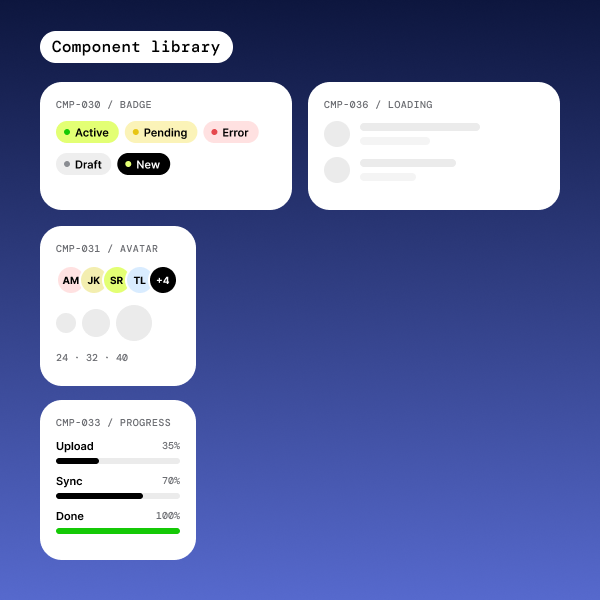
We review contributions against what already exists, helping your team decide when to reuse, adapt or introduce something new. Feature design can be scoped separately; guardianship keeps the shared foundations coherent.
Not Sure Whether Your System Needs a Tidy-Up or a Rebuild?
We start with what you have. Our initial review helps separate useful foundations from genuine problems, so you can make an informed decision. If a substantial rebuild is needed, we’ll scope it separately rather than quietly turning your retainer into a different project.
Your product will keep changing. Let’s make sure your design system can keep up. Get in touch below to talk through what you have and where you want to take it.